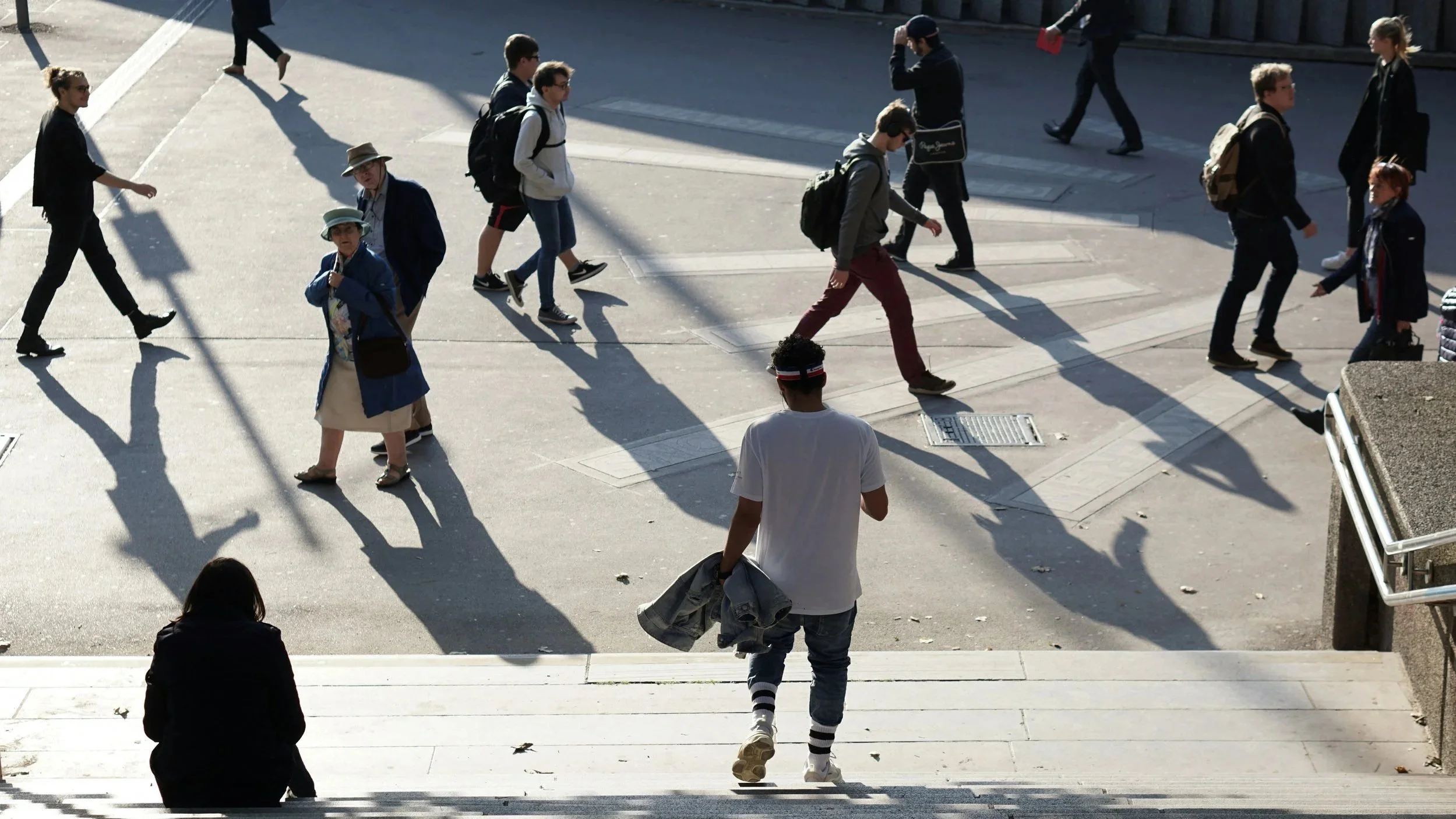
Some people need their body to work hard every single day — not as a choice, but as a requirement. If your job demands physical stamina, repetitive movement, or prolonged postures, or if an active life outside work is central to who you are, then pain and injury aren't just inconvenient. They threaten your livelihood, your identity, and the things you love doing.
Acupuncture — alongside other Traditional Chinese Medicine tools like cupping and gua sha — can play a meaningful role in both recovering from injury and building the kind of physical resilience that keeps you doing what matters.
Who is this for?
→ People who are physically active at work
Many occupations place significant and sustained demands on the body — demands that accumulate quietly until something gives way. This includes:
Tradespeople — builders, plumbers, electricians, joiners — carrying, lifting, working in awkward positions
Healthcare and care workers — nurses, paramedics, physios, carers — patient handling, long shifts on your feet, repetitive strain, changing shift patterns that affect your sleep and energy
Hospitality and retail workers — long hours standing, carrying, and moving
Teachers and early years workers — on your feet all day, often in less-than-ideal postures
Drivers and delivery workers — prolonged sitting, loading and unloading
For people in these roles, managing pain isn't tackled with rest alone — often, you may feel like you can't. It's about keeping the body functional and recovering well between demands.
→ People with active lifestyles
Physical activity is one of the best things you can do for your long-term health — but it also places the body under load, and injuries happen. This includes:
Hikers and fell walkers — knee, hip, ankle, and lower back strain; the cumulative toll of miles on rough terrain
Climbers — finger, wrist, elbow, and shoulder injuries; tendon and pulley strains
Cyclists — knee pain, IT band issues, neck and lower back strain from sustained riding position
Runners — shin splints, plantar fasciitis, knee pain, Achilles tendinopathy
Gym and strength training — shoulder impingement, lower back strain, recovery between sessions
Parents of young children — 24/7 hustle; carrying, lifting, bending, and sleep deprivation place a real physical toll on the body
How does acupuncture — and other TCM tools — help?
→ For acute and recent injury
In the early stages after an injury — a sprain, a strain, a pulled muscle — acupuncture can help by reducing local inflammation, improving circulation to the injured tissue, and supporting the body's natural repair processes. It can also help manage pain without relying heavily on anti-inflammatories, which in some circumstances may actually slow tissue healing with prolonged use.
Where there is a lot of muscular guarding or localised tension around an acute injury, cupping can be a useful complement to acupuncture. By creating a gentle suction that lifts the tissue rather than compressing it, cupping encourages blood flow to the area, helps release tight fascia, and can accelerate the early stages of recovery. It's particularly effective around the upper back, shoulders, and lumbar region.
Acupuncture works well alongside physiotherapy and osteopathy in the acute phase — I'm happy to work in parallel with other practitioners and, where helpful, to communicate with them about your care.
→ For persistent and recurring pain
Many people in physically demanding work or active lifestyles don't have one clean injury — they have an accumulation of strain, overuse, and repeated micro-trauma that has settled into persistent pain. The knee that was never quite right after that fall three years ago. The shoulder that flares up every time training ramps up. The lower back that goes every six months without fail.
Acupuncture addresses persistent pain through several mechanisms: modulating pain processing in the central nervous system, reducing the central sensitisation that often underlies chronic pain, releasing local muscular tension and trigger points, and improving circulation to tissues that are slow to heal due to reduced blood supply.
Gua sha — a technique in which a smooth tool is used to apply firm, repeated strokes to the skin over affected muscles — is particularly valuable for chronic muscular tension and restricted movement. It breaks down adhesions in the connective tissue, stimulates local circulation, and has a strong anti-inflammatory effect at a cellular level. Research has shown that gua sha upregulates the enzyme HO-1, which has a potent anti-inflammatory action in muscle tissue. It can feel intense in the moment but typically produces a notable release of tension and improved range of movement immediately afterwards. The temporary redness it causes — called sha — fades within a day or two and is a sign of increased local circulation, not damage.
For persistent upper back and neck tension — a common pattern in tradespeople, desk workers, and anyone carrying physical load — a combination of acupuncture and gua sha in the same session is often more effective than either alone.
→ For recovery and resilience
Regular acupuncture can support faster recovery between physical demands — reducing muscle soreness, improving sleep quality (which is when most physical repair happens), and supporting the nervous system's ability to shift between effort and recovery. Many athletes and physically active people use acupuncture not to fix a specific problem, but to maintain a body that performs consistently and recovers well.
Cupping is also widely used in recovery contexts — familiar from elite sport, where its use has become increasingly visible. The lifting action of the cups decompresses the tissue, encourages lymphatic drainage, and helps clear the metabolic byproducts of exertion from muscles more efficiently. For people with a heavy training load or physically demanding work schedules, a session combining acupuncture and cupping can significantly reduce the recovery time between demands.
What to expect
Your first appointment (60–75 minutes) begins with a full consultation — a conversation about what you're experiencing, your work and activity demands, your injury history, and your goals. This shapes your treatment plan. Treatment follows in the same session.
For acute injuries, a shorter course of 3–4 sessions close together can produce rapid improvement. For persistent or recurring problems, a longer course of 6 sessions is a common starting point, after which we review progress together. Many people in demanding physical roles continue with periodic maintenance treatment to stay ahead of problems rather than waiting for them to become acute.
I offer a free 15-minute telephone consultation if you'd like to talk through your situation before booking.
Appointments in Sheffield S7
I practise from Fiveways Therapy Centre, 2 Kenwood Road, Sheffield, S7 1NP, with appointments available on Friday afternoons and evenings, and alternate Saturday mornings.